
The bane of deer: why humans have evolved to be endurance athletes
You’ve been running for hours in the suffocating heat of the day. Finally, you discover a shaded, hidden area to rest. But it isn’t the sun from which you seek escape- it’s that which haunts you.
Just as you believe safety is at hand, over the brow of the hill, materialising from the rippling haze there appears the menacing silhouette of your bidepal pursuer. Heat exhaustion sets in and you succumb to the indefatigable hunter.
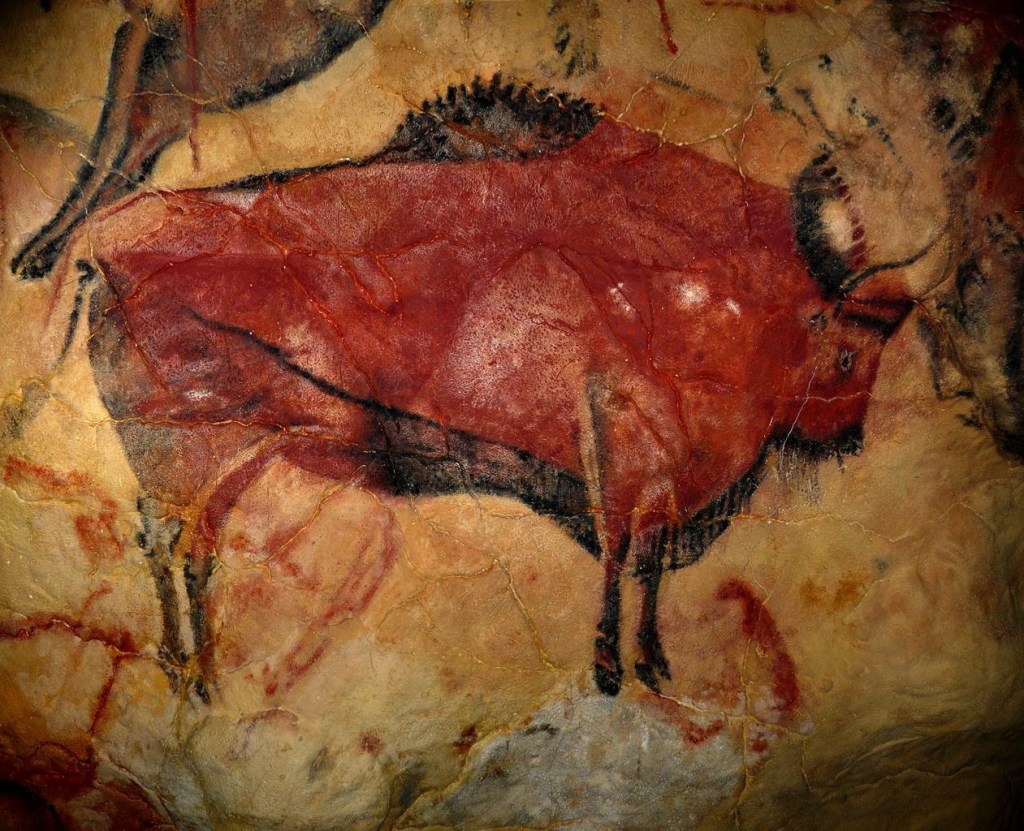
The above describes the final moments of a prey animal, such as a deer, in 200,000 BC. Here we step into the cloven hooves of a victim of ‘persistence hunting’: a proposed method of hunting employed by early humans.
It certainly makes sense that our ancestors would use such a technique. It exploits our best physical attributes which lie not in raw strength or explosive speed, but in dogged endurance. Simply acting as a dread-filled shadow – at times a rumour of a pursuer – is the perfect way to safely bring down prey through inflicting stress and exhaustion. (With just one chase required to eat for many days, the energy return on investment is also an attractive prospect).
Humans are unique among primates in our ability to perform endurance running. If not persistence hunting, or the ability to scout swathes of land, then we must possess this talent for good reason.
Historically, evolution has selected for those who don’t mind a bit of cardio; we possess numerous biological features (bone structure, specific tendons, millions of sweat glands) which help us reach that runner’s high.
So why does exercise not light up my primal instincts?
Of course, you wouldn’t see early humans going out for a morning jog purely for enjoyment. Our endurance is a survival feature first and foremost. It has been of vital importance for the 95% of human history wherein we have led hunter-gatherer lifestyles; physical exertion and the possession of cardiovascular fitness has been a necessity for the vast majority of our history.
But what about me and you in the latest 5%? (A period of somewhere between 10-20,000 years since the beginning of agricultural societies.) The fact is, with the need for physical movement largely eradicated in modern societies, such activity is now a choice. Making this choice – performing the voluntary effort to improve physical fitness – is what we call exercise.
Exercise is, by the accounts of many evolutionary biologists, not something that comes naturally to us. Remember, this isn’t to say we aren’t built for physical exertion such as endurance running, it means that choosing to exit a state of energy conservation needlessly is against our very nature.
In other words it is argued that, just like our ancient ancestors, inessential caloric expenditure is something we are wired to avoid. It’s why we park as close as possible to the shop entrance, or take the lift instead of the stairs. Laziness, in this context, is flipped into (supposed) sensibility.
However, as evolution is yet to account for Uber Eats, our bodies still require physical activity on a daily basis. This is a rather irritating realisation as not only do we have to brave the local gym, we have to fight our instincts to even get through the doors.
Nevertheless, it is an important angle to understand and can be a comforting thought. That part of us that looks at ultra-marathoners and thinks ‘absolutely not’ is the manifestation of our propensity for energy conservation.
Clinging on to our stored calories is only made easier living in a society that fosters sedentism. So don’t be so harsh to yourself if you ‘don’t feel like it’. After all, we possess the same brains as the earliest ‘modern humans’, a brain which therefore has instincts that are a little outdated.
Should we go against our natural aversion to exercise?
All of this isn’t to recommend we sink deeper into the sofa and increase the angle of the hunch at our desks. Making the choice to exercise is as important as ever.
Most of us aren’t required to conserve energy anymore as we are drowning in nutritionally dense, accessible food sources. If you’re like me, the only effort involved is choosing from the menu and therefore energy conservation is a state of being to which we are estranged.
To exercise is to fulfil our biological need for physical exertion, which is no longer met by the nature of our society. We are lucky to be among the first humans who (especially if we have a sedentary job) have a choice to perform physical activity, and the burden of this choice might go some distance to explain the unnecessary guilt involved with not getting our reps in.
So, now to ask ancient humans what exercise we should be doing. Well, the answer certainly isn’t chasing deer to exhaustion. However, as we shall find out, nor does best practice necessarily lie within the walls of an overcomplicated, impersonal, and daunting gym.
The dreadmill: how to wrestle exercise back to being within our nature, and why we lost it in the first place
Revisiting our topic of endurance running, have you ever felt a treadmill is equivalent to a torture device? That’s because it is exactly that. The first treadmills, known as ‘penal treadmills’, were used in 19th century British and American prisons to punish inmates through hard labour.
Most historical examples are reminiscent of a StairMaster, or ‘everlasting staircase’. This dull and unavailing constant motion is grating to morale as prisoners worked a large wheel to, for instance, grind grain.
Inmates performed their task in a row facing forward and without communication with one another, an image recreated by that of the long lines of treadmills we see in modern gyms. Should you remain unconvinced of the treadmill’s dark roots, consider that, before his redemption, Ebeneezer Scrooge is a supporter of these contraptions in A Christmas Carol. This is famously not good company to be in.
It isn’t the motion of the treadmill that’s the issue – we’ve established that – but the context and the setting. Propelling ourselves through nature versus running on an unending treadmill belt reminds me of a quote from 18th century Genevan philosopher Jean-Jacques Rousseau: ‘Everything is good as it comes from the hands of the Author of Nature; but everything degenerates in the hands of man’. Treadmills, in this context, just suck the fun out of it all.
Modern equipment and machinery is here shown to drag us further from nature. Running but not going anywhere is a common feature in nightmares, so why would we expect to achieve our fitness dreams doing precisely that?
It is so often asserted that we belong outside and immersed in nature, especially when it comes to physical activity. Research suggests that the combination of exercise and outdoor exposure is a potent one for our health and cognitive function. It’s one of those self-evident truths we certainly know from somewhere- perhaps buried in the vaults of our brains by our earliest ancestors and therefore ‘understood’ from birth.
Getting outside puts us more in touch with our senses, preventing the boredom setting in from staring out at the greyscale gym walls that would otherwise surround us. While you cannot argue their lives were overall easier than ours, the earliest humans would’ve been outside soaking in the vitamin D far more often than not during waking hours.
Vitamin D, or lack thereof, in fact acts as a useful witness to further the case against indoor exercise, and map the wider developments that made this the most convenient (or only) option available to us.
The job of vitamin D, of which plenty was on offer to the earliest Homo sapiens in Africa, for our skeletal system alone is significant. For 300,000 years now, the evolution and integrity of our skeletons has been bolstered by the sunshine vitamin, not to mention the identified possible benefits for mood, muscle function and immune health among others.
This natural process is therefore of key importance for us, but it has been inhibited by two major historical factors.
The first occurred around 70,000 years ago when Homo sapiens decided to go globetrotting. As such, especially among those who decided home lay northward, vitamin D exposure became seasonal in nature. Those dark months are precisely why many, myself included, have modern supplements at hand.
The second intrusion on our vitamin D stores, looping back to our introduction to this topic, can be identified as a feature (or bug) of industrialisation and its capitalist offspring. With many of us now tied indoors for our working lives, deficiency is rampant: 57% of UK adults have low vitamin D levels as per April 2024.
So, we find ourselves up against a society and a natural inclination that combine to keep us indoors and sedentary- depriving us of the myriad health benefits that lie seemingly out of reach. Moreover, equipment such as treadmills aren’t fit to unlock the full potential benefit of exercise we do manage to perform. Let’s address what we can do to break these constraints- it isn’t as complex a task as you may imagine.
Walking you through it
The obvious answer to the above is, of course, to ensure we get outside to exercise. While running represents a fruitful activity of choice, it might actually pay to slow down. Walking can be just as effective, if not more, than running in achieving positive health outcomes, and it feeds back into our discussion of our anti-exercise nature.
The earliest humans employed running only in times of need, often acting as the hunter or the hunted. Walking was most likely the preferred method of personal transport, and we have evolved for this activity to use as least energy input as possible.
For this, we can thank our own two feet. Or, I should say, be grateful we aren’t thanking our own four feet. Bipedalism uses far less relative energy (up to 75%) to walk than the ‘knuckle-walking’ employed by quadrupeds, meaning we can stroll for great distances without feeling ravenous and exhausted.
Walking, in this context, can even be the preferred choice over running. As we are able to perform the activity for much longer than running, this increases our time spent outdoors, lengthening the period we can reap those natural benefits enjoyed more-freely prior to the industrial revolutions.
There’s therefore no fault in choosing the tortoise over the hare in our pursuit of fitness, it is precisely the choice made throughout human history in pre-agricultural societies. Overall, it is certainly a less daunting task to embark on a walk than a run, and that is reflected in our evolution towards developing walking towards maximum energy efficiency.
Walking operates on both sides of our discussion earlier regarding exercise not being in our nature. We here find a loophole in the argument, as this form of exercise is what comes most naturally to us.
Walking is a lovely paradox in that it is both voluntary exertion and within our nature. It is all we need to emulate early humans, in the context of why we require exercise in the first place.
No, you don’t need to throw all your shoes away
However, the above hasn’t stopped the formation and promotion of other ways to channel our inner caveman in our pursuit of fitness and wellbeing. It has become something of a trend to embrace the lifestyle of early humans to mirror their physical potential. The fact is, the potential is already there- we just aren’t required to fulfil it anymore for our basic survival.
So no, we don’t need to subscribe to the carnivore diet, run barefoot everywhere, or subject ourselves to ice-cold plunges to live closer to our nature and our earliest ancestors. The evidence shows it is plenty enough to simply use our bodies and perform movement in a natural way. A way that doesn’t leave us battling our nature, or bereft of it.
The end of this session
While we have detached physical fitness from basic survival, it remains an important factor to achieving something more than that in our lives. We must be thankful for our instincts but also recognise they, like that problematic bloke in the pub, hold outdated views.
The voice that tells you not to enact physical exertion doesn’t realise we don’t have ‘chase after a deer until it collapses from exhaustion’ on our weekly to-do list, and so we must find ways to push through this in our fitness endeavours.
It is the opinion of Selfish History that something as simple as walking outside respects our natural urge for energy conservation while mirroring the lives of early Homo Sapiens in achieving fitness while immersed in nature.
So, when that particular co-worker asks why you aren’t using the office gym anymore, in favour of getting out for lunch, consider another pair of quotes from the philosopher Jean-Jacques Rousseau:
‘…nature made man happy and good, but that society depraves him and makes him miserable’
‘What varied pleasures we enjoy in this delightful way of travelling, not to speak of increasing health and a cheerful spirit […] those who go on foot are always merry, light-hearted, and delighted with everything. […] If you only want to get to a place you may ride in a post-chaise; if you want to travel you must go on foot.”
Or, just reply with a series of caveman grunts, showcasing your choice to live in accordance with human nature and early man.
Either will get them to stop talking to you.
***
Selfish History’s book recommendation:
A Hunter-Gatherer’s Guide to the 21st Century: Evolution and the Challenges of Modern Life by Heather Heying and Brett Weinstein
Two evolutionary biologists here further address the issue as to our modern society not being fit to accommodate our most embedded needs. Heather and Brett identify serious problems such as depression, obesity, sleep issues, and loneliness as caused by the dearth of opportunity in our modern world to allow ourselves to live as we should- as our ancient ancestors did so.
Branching out further than our discussion on physical fitness here, the authors aim to offer us the tools with which to improve our lives and push back on the unnatural way of life we find ourselves boxed into.


 Selfish History
Leave a comment