
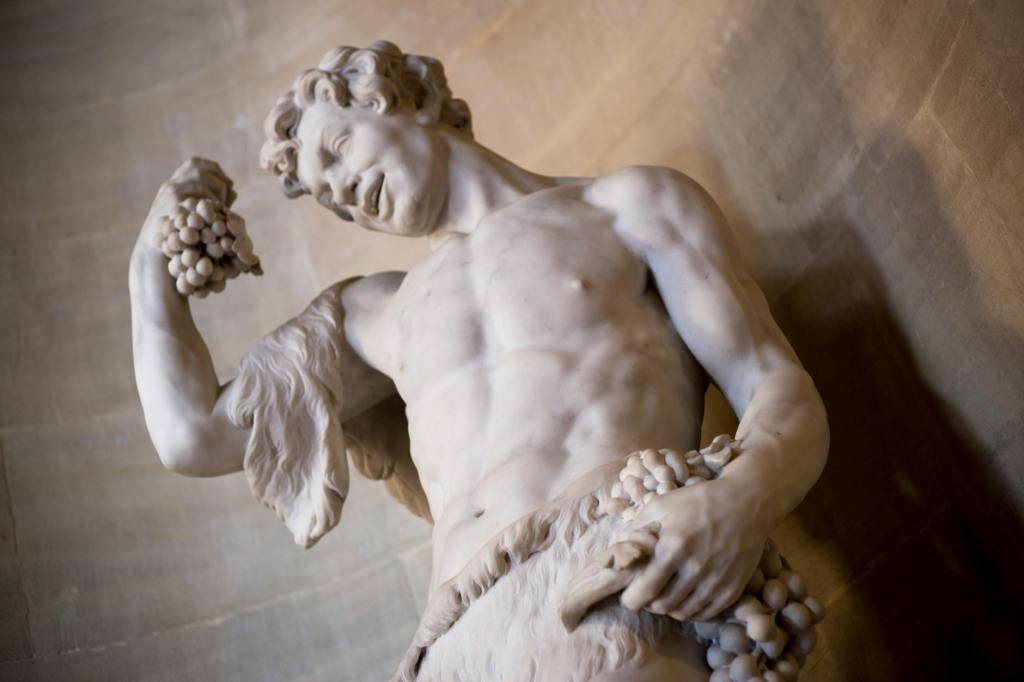
Follywood: in futile pursuit of a fictional, Spartan, body
It is a self-evident truth that Hollywood, and the film industry as a whole, has fostered a massive problem when it comes to body standards. You likely also don’t need me to tell you these standards are fundamentally unrealistic and, for many, dangerous in their application.
However, the extent and complexity of the production line at the eye-candy factory is worthy of inspection. It helps to cement the futility in attempting to fabricate ourselves into a replica of our fictional fitness role-models, and serves to validate my topic for this piece: looking back to ancient Greece to form our fitness mindset.
Unless we become delusionally engrossed in what we are watching, we are generally able to reliably separate fact from fiction at the movies. The (you could say) glaring exception, staring us in the face is the bodies that are pedestalled on-screen. Fictional indeed, these fleeting shots represent a dedicated effort from chefs, personal trainers, sleep therapists, makeup artists, directors, post-production editors, and – yes – illegal substances (among many others).
We aren’t finished there. An additional layer of Hollywood magic is applied directly prior to filming concerned scenes through dehydration techniques and intense exercise to truly make these bodies as fictional as their characters. The actors themselves can’t retain the look; the bodily punishment is only in service for before and during filming- especially for those select sans shirt scenes.
This leads me to what is, for men at least, one of the worst offenders: 300 (2006). This film has spawned its own eponymous branch of the fitness industry, and serves as the perfect temporal bridge to look back to ancient Greece for a reality check, and to uncover the correct best practice.
The film tells the story of the battle of Thermopylae, wherein that very number of Spartans (among thousands of others) led by Gerald Butler King Leonidas bottlenecked the vast Persian invasion force at a critical moment of the Greco-Persian wars (499-449 BC). Gerald and co. do a stand-up job at shoutily eliciting Persian blood flow and, famously, they look good doing it.
Gerald Butler himself has said he existed in a near-constant state of exercise on set to ‘pump’ his muscles for takes, while training for six hours a day in the lead up to stepping into Leonidas’s sandals. While the result is impressive, it is an egregious example of the permeation of Hollywood body standards into the minds of us popcorn-munchers, equipping us with unachievable fitness goals.
Fitness publications and sites were all too aware that a keen sense of inferiority upon viewing would bring droves of men to their shores. So it is that ‘the 300 workout’ and discussion around the bodies of those who defended the renowned mountain pass still generate eager clicks today.
Spartan mania in a post-300 world has also given rise to a wider infatuation with Sparta and Spartan culture; ‘Laconophilia’ (as named after Laconia, the region wherein Spartans lived) has been evident throughout history and, thanks to love letters such as 300, has enjoyed a modern resurgence. Here, it is not just the centrality of fitness to Spartan culture that is lauded (although that is very much the case) but also the wider matters of state.
No, you don’t want to live like a Spartan
Laconophilia has come to define a lifestyle and, at times, a dangerous mindset. Spartan shields and helmets adorn t-shirts, posters and jewellery as (mostly) men align themselves with what they believe to be the values held by Spartan society. You’ve probably also seen or heard of multiple sports teams with ‘Spartan’ in the name, positioning the ethos of the club towards that ruthlessly effective militaristic society and channelling that Spartan physicality.
This (literal in the case of Leonidas) lionization of Sparta and Spartans is often seen to be performed by the far-right. The apocryphal events at Thermopylae chief among them, Spartan history and values have been applied by unsavoury characters with figureheads such as Leonidas placed at the helm.
It is not difficult to join the dots of the broad strokes of Spartan society with the far-right. Raising of a military class from birth, unrelenting subscription to fixed values (to the point of self-sacrifice), strict militaristic code, a violent allergy to outsiders (and subsequent preservation of racial purity) are all features of the much-celebrated society. Indeed, there is plenty of evidence that Hitler took a Spartan chisel to his sculpting of Nazi Germany.
Practices such as removing those with disabilities and deformities from the population are mirrored across both Sparta and Nazi Germany. Hitler also militarised the education of young boys in Spartan style, instilling concentrated patriotism and readiness for war into the teenage veins of the Hitler Youth. Hitler himself praised the supposed racial superiority of Spartans and commended theirs as ‘the first Völkisch [ethno-nationalist, eugenic, racialist] state’.
In the context of the above, here are some the top results when I Googled ‘how to get fit like a Spartan’;
- How to Live and Train Like a Spartan Warrior
- 9 Ways to Live Like a Modern-Day Spartan Soldier
- 7 Ways to Live a Spartan Lifestyle
- Spartan Training- Workout Like the Legendary Warriors
A historically accurate article will begin with something as follows:
‘Step one: if the elders grant you escape from infanticide, you will be lucky enough to- at age seven- be separated from your parents and begin your Spartan education. Here you will undergo years of brutal contest and (hopefully) survive a childhood saturated by blood, sweat and tears as you are forced to metamorphose into the soldierly man required by your militaristic state.’
You can see why articles such as those above don’t serve a historically accurate dish to those hungry subscribers of Laconophilia.
While I’m not labelling these articles, or anyone who desires a Spartan body or lifestyle, as alt-right, it betrays a deep ignorance to the realities of Spartan society and shows that holistic understanding of Sparta is an unimportant matter resigned to academics. Infatuation with Sparta brushes aside or simply doesn’t acknowledge the matters of state which Hitler took inspiration from.
Mainly, it saddens me that Spartans take up so much of the conversational bandwidth when it comes to fitness in ancient Greece. Sparta is the wrong place to look for fitness inspiration; its teachings are inapplicable, antiquated, heavily weighted towards men, and in the hands of the far-right downright menacing.
In the Selfish History style, we look to consult history for the teachings we can understand and action when it comes to our own personal development. Unless you truly want to dedicate your existence to building your body in preparation to serve your state in war (this Spartan education was known as the agoge) then Sparta is not the door upon which to knock.
Instead, we can leave the Spartans to their ways down in Laconia and pilgrimage (or, these days take the 3.5 hour bus) to Athens. It is here that we can glean the most valuable lessons about fitness from ancient Greece. Athens’ fitness teachings don’t concern specific exercises or are even physical in nature at all, instead they come from that which is most applicable and understandable across time and across culture: philosophy.
Fitness Philosophy from Athenian Greats of the Game
You might be pondering how philosophers could muster themselves to stop talking for long enough to draw breath for exercise- but fitness and the body is a significant topic on the agenda of Greek Philosophy. It can teach us why we should exercise, which is altogether more important than the how.
So, at this stage we can put down our spears and engage our ears. It should become clear that our motivation to get fit and gain understanding of our bodies ought not to stem from a desire to become adept at mowing down a Persian invasion force.
Taking only a slightly reductionist lens, Sparta is to Athens what 300 is to The Godfather. While Sparta is known for its ferocious action and people-pleasing simplicity, Athens prefers to take a considered and thoughtful approach, achieving targets with a scotch in hand. It is therefore unsurprising that Athens, the democratic thinking man of ancient Greek city-states and hub of philosophy, committed a great deal of thought to physical fitness.
Socrates through Xenophon’s Words
Let’s start with the head honcho of Western philosophy himself- Socrates (c. 470 – 399 BC). While Socrates never committed any of his thoughts to writing, his students, chiefly Xenophon (c. 430 – 354 BC) and Plato (c. 427 – 348 BC), have provided a significant record of (allegedly) the words and teachings of Socrates. (These often took the form of placing Socrates in critical conversation with others and are therefore known as ‘Socratic Dialogues’- the latter of those words is generous given Socrates’ often considerable share of the airtime.)
It is to Xenophon’s Memorabilia – one of those works channelling Socrates’ wisdom – that we will turn to first. This particular dialogue ends with one of the most shared, if a little corrupted, quotes from Greek philosophy on fitness and the body.
We open with Socrates running into an acquaintance named Epigenes. Socrates, much like a blunt and straight-talking family member at Christmas, remarks how Epigenes is looking somewhat out-of-shape. Epigenes replies he is no athlete (and therefore isn’t required to dedicate himself to physical fitness). Cue Socrates pouring out his philosophical knowledge.
While Socrates begins to talk about the importance of physical fitness in serving one’s state in war (it is a somewhat unavoidable topic given the climate at this time; Socrates himself was said to have fought well for Athens during his life), he goes on to offer more general wisdom. Socrates, speaking of course through the mind of Xenophon, asserts that no activity in life is hampered or inhibited by valuing physical exercise.
This speaks to the wider belief that, as we use our bodies in everything we do and strive to achieve, physical fitness is therefore of great importance. Socrates, finding a receptive canvas for his thoughts in the plump Epigenes, goes further to highlight that even in healthiness of mind a fit body can be identified as a significant facilitator.
Socrates here identifies poor physical health as a contributor to a sluggish and ineffective mind. The threads of discontent, idleness and misery (stemming from physical inactivity) here weave together to ‘attack the mind so violently as to drive out’ and cloud over our existing knowledge and wisdom.
It is taken that this concerning attack is reversed by striving for and maintaining physical fitness. This leads to a happier, good, life- essentially the ‘X’ on the mental map of Philosophers such as Xenophon and Socrates.
Socrates, obviously, puts a bow on this angle better than I:
‘And surely a man of sense would submit to anything [exercise] to obtain the effects that are the opposite of those mentioned in my list [Depression, memory loss, discontent]’
– Socrates, in Xenophon’s Memorabillia 3.12
As if Epigenes isn’t by this stage ready to revive that gym membership and buy a Bowflex on his way home, Socrates finishes with that quote you may have come across before- of which I will provide in the less TikTok friendly translation:
Besides, it is a disgrace to grow old through sheer carelessness before seeing what manner of man [or woman] you may become by developing your bodily strength and beauty to their highest limit. But you cannot see that, if you are careless; for it will not come of its own accord.
– Socrates, in Xenophon’s Memorabillia 3.12
Plato: Pastor at the Marriage of Brain and Brawn
Like Xenophon, but perhaps to a slightly greater extent, it is generally understood that Plato used Socrates as a mouthpiece (through the Socratic dialogue style) for his own works and views. This uncertainty of whose thoughts we are reading is one stream that contributes to the overall murk of the Socratic Problem.
We will therefore continue to focus on the content itself, rather than waste time trying to untangle the great mass of bundled Christmas lights that form this ‘problem’.
You couldn’t accuse Plato of hypocrisy when it came to his promotion of physical fitness. Likely born Aristocles, ‘Plato’ is a nickname from the Greek for ‘broad’ – a name said to refer to his chest and shoulders. Plato’s success at wrestling and sporting ventures naturally feeds into his philosophy on the importance of fitness.
Like Socrates, Plato identified a ‘dualism’ between mind (or soul) and body. This separation is the backbone that forms many of the thoughts on physical fitness discussed here. Plato, as did Xenophon/Socrates above, sharply recognises the benefits of bodily fitness to moral and intellectual development. The body and mind are here separate but linked in various ways; the development and improvement of one can be reliant on the other.
In fact, training the body can concurrently train the mind through exercises in fortitude and through discovering and challenging your limits. This annoyingly validates that insufferable quote wheeled out by the super-fit at your most exhausted state: ‘it’s all in the mind, man’.
So, mastering the body represents a key puzzle piece in mastering the mind. With the separation inherent of dualism, a balancing act is required. Plato identifies physical exercise as the steady platform within this effort to balance the mind and body. A balanced life, after all, is a good one – one that boasts a holistic kind of contentment.
With balance we can of course topple both ways, and so Plato advocates for moderation in all aspects of life, including fitness and exercise. Such a belief is the antidote to the ‘300 workout’, as it is not a practice of moderation.
Plato shakes his head to these gruelling regimes and says ‘do enough’. We are given licence to balance our mind and body as we see fit; if you identify one is particularly losing market share, perhaps it is time to place an investment.
You may have heard of Plato’s ‘Republic’. This series of dialogues addresses central questions through outlining a number of hypothetical cities, in search of the perfect, ordered, and just city-state (and by extension population). In outlining his perfect city-state Socrates, written by Plato, advocates for physical activity to form a large part of the education of both men and women.
This is evidence of the extent of the value placed on physical fitness by Plato. His promotion of exercise is important within his idealisation of the model population. Keeping one’s fitness in check, as part of that balancing act in maintaining a well-rounded and virtuous life, is nicely put here:
‘Lack of activity destroys the good condition of every human being while movement and methodical physical exercise save it and preserve it’
– Plato
Plato’s dedication to mind and body is commendable, his attendance to both the mental and physical gymnasium exemplary. However, in Plato’s Athens, these are not two separate entities, as gyms matched the dual nature of humans. This duality is translated at every level, all the way up to the zenith of competition: the Olympic Games.
The Dual Burden of Olympians
The way in which fitness and philosophy were entwined and conjoined as pursuits to the same end (the good life) was made tangibly apparent under the roof of the ancient Greek gymnasium. Here, you could finish your last wrestling session, hop across the way, and wrestle intellectually with philosophical opponents.
This duality of the gymnasium fed into every level of training, competition, and personal betterment. It is therefore unsurprising that the pinnacle of competition and sport in ancient Greece – the Olympics – flowed with virtue and philosophy surrounding the importance of striving for physical fitness.
While steeped in religion, the original Olympics served also as the summation of the Greek belief in seeking harmony between mind and body. The shining excellence expected of Olympians – then and now – extends beyond muscle tissue and sweat, it includes moral and ethical virtue also.
It is shown clearly in the Olympics’ own definition of ‘Olympism’, the essence of the games:
Olympism is a philosophy of life which places sport at the service of humanity. This philosophy is based on the interaction of the qualities of the body, will and mind.
– The Olympic Museum
It is evident, then, that our expectation of Olympians to be paragons of virtue has a philosophical lineage that can be traced all the way back to Socrates telling Epigenes to do some push-ups. More specifically, we see here that enduring belief that we have an obligation, a requirement, to exercise our mind and body together.
These Greek philosophers didn’t just say it was a clever idea to exercise, they located wisdom and intellectual improvement within the act itself.
Selfish History’s book recommendation
Exposed: The Greek and Roman Body by Caroline Vout
Looking at Greek statues and imagining the naked athletes performing in the original Olympics can conjure an image that Ancient Greeks (and their Roman counterparts) were universally athletic – perfect. It wasn’t the case, especially among rulers to whom statues were propaganda vessels to portray their chosen image (looking at you Augustus).
In Exposed Vout outlines the reality of the ancient body, highlighting their ailments and obstructions to achieving that chiselled look we wrongly attribute them. It is a refreshing reminder that not everyone in antiquity mirrored Apollo or Aphrodite, and tackles the ways in which the body, one half of the dualistic coin, was understood and explored in the period we’ve talked about here and beyond.




 Selfish History
Leave a comment