
Conversation Concerning Conscription
In May 2024, in the midst of a rocky start to his failed re-election campaign, UK Prime Minister Rishi Sunak announced a flagship policy: national service for all 18-year-olds. The proposed service offered teens a choice of two options.
The first required one weekend a month (25 days a year) volunteering within an organisation such as the police service or fire service. Teens could also try their hand at lifeguarding or search and rescue among other pursuits.
Alternatively, a full-time, paid, placement can be sought in the armed forces in key areas such as cybersecurity and logistics – 30,000 of these ‘competitive’ placements were available under the plans.
The tepid-at-best public reception of the plan didn’t stop Sunak from standing by this policy. In a subsequent interview he asserted national service will ‘foster a culture of service in our society’ which will, says Sunak, ‘contribute to our long-term resilience and security’.
It is words such as these that lend credence to the position that something more is going on behind the scenes. That, behind the veneer slathered on the policy, here lies an attempt to produce a young generation with skills and experience to serve their country in times of need. In other words, a rollout of conscription-lite.
The active-nature of much of the service on offer can also be interpreted as an attempt to physically prepare British teens for possible difficulties ahead, through cultivating a fitter population. (Presenting this policy from an additional angle of tackling the proliferation of young people classed as overweight or obese in the UK, and therefore as beneficial for public health, might have been more effective than harking to a culture of service, but that’s just my opinion..) Indeed, fitness is historically important in maintaining an effective wartime society both at home and at the centre of fighting.
As we know, the world this kind of policy rhetoric enters is one of growing unease; we have shifted from living in a post-war world to one of impending and creeping global conflict. Sunak’s national service announcement, and subsequent linkage to preparing the young generation to bolster our security, came in response to the growing western-cast shadow of Russia as well as the boiling crisis in Israel and Palestine.
Key figures in the UK, often in the context of the above, have either danced around the word conscription, or outright re-introduced it to the national lexicon. On the former side there is current head of the British Army Sir Patrick Sanders who, speaking in January 2024, called for a ‘whole-of-nation’ effort should NATO declare war on Russia.
This translates into a ‘citizen army’, one which is comprised of volunteers but, as Sir Patrick says, represents a citizenry ‘trained and equipped’ to fight if necessary.
Following on from Sir Patrick’s words came Sir Richard Sherriff, former NATO Deputy Supreme Allied Commander (a title that sounds almost made-up, bundling in accolades like that of a Roman Emperor, but one held by him all the same). Sheriff, with his perfect surname and voice fit for 20th century wartime radio, agreed with the requirement of a citizen army as outlined above.
However, he identified that in the event of war with Russia, Britain would struggle to find the number of volunteers needed to bolster armed services numbers, which he describes as in ‘freefall’. To this, he grimly observes that careful consideration should be given to full conscription in shoring up our armed forces to numbers required for a ‘warfighting division’.
So, here is the backdrop to Rishi Sunak’s national service proposal. Labour, then Official Opposition, described the policy as creating a ‘teenage Dad’s Army’. This clever quip takes a darker shade of humour given the growing storm we are seeing, the winds of which may carry the younger generation into preparatory service. A draft for a draught, if you will.
Effective conscription (or gaining a healthy number of volunteers) relies on a few things, not least a culture of service, hands-on experience, and strong market share of willingness and patriotism in the overall population. Fitness, however, is the enabler of effective output from these individuals who, even if a greater patriot than the King himself, need a body to deliver on their intentions – and that of their country.
The importance of fitness here to all involved can teach us about valuing our own fitness. Don’t worry, this isn’t in the context of going off to war, Selfish History seeks to offer more personal and actionable advice. Instead, the practice of conscription, and the centrality of fitness in effective protection of ourselves, our values, even our country offers a nice platform for extracting some insight and approach to fitness.
While conscription as a practice has existed for millennia – we have already covered the forced military service evident in ancient Sparta, for example – recency bias dictates we cast our minds (naturally not too far back) to the 20th century.
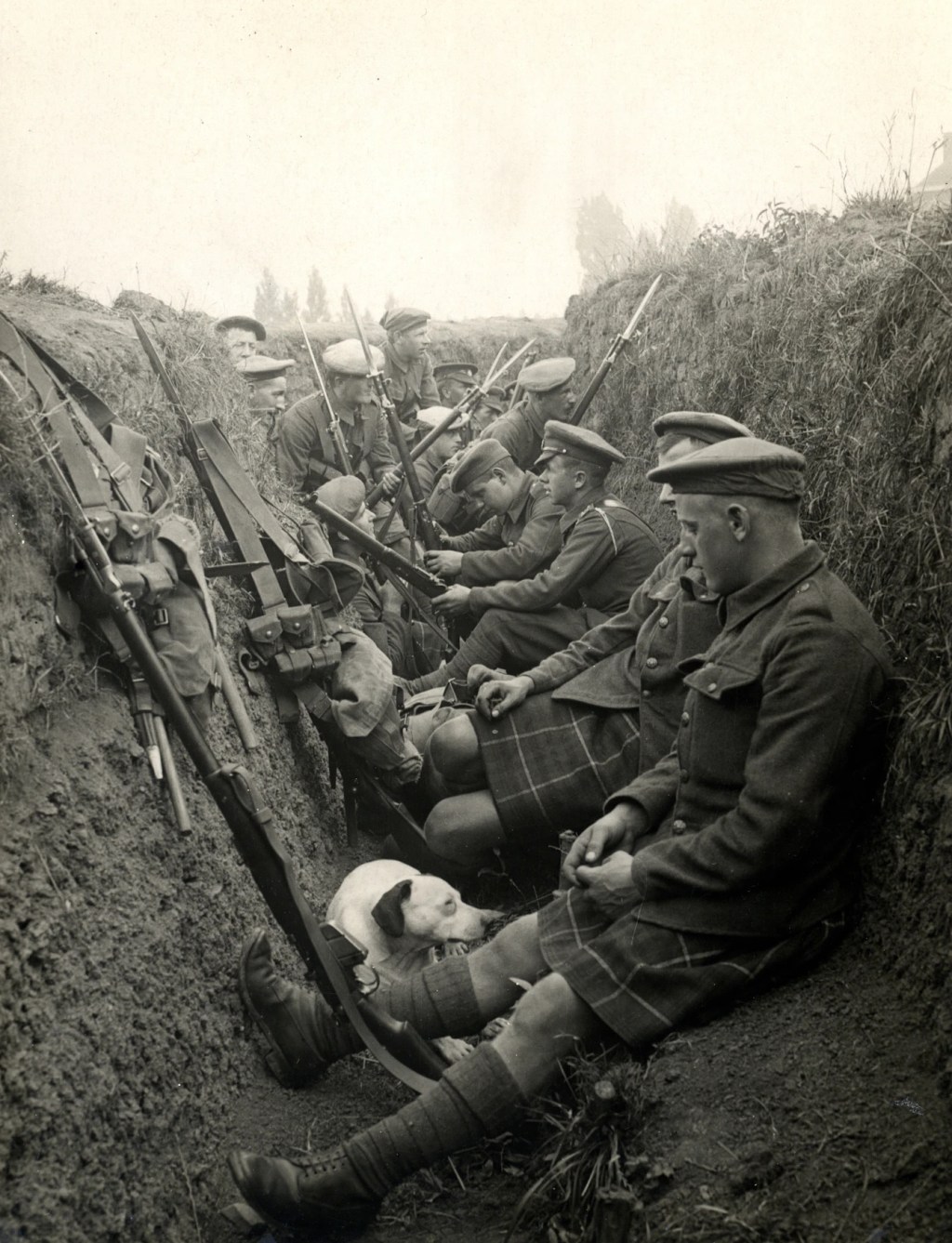
Conscription in World War I
While World War II forms the main focus of our brief history of conscription, it is worth stopping by World War I first. This helps us to understand the formation of the practices in mobilising the population that were repeated only a few decades later. Let’s also narrow the discussion down to only Britain, as this has formed the basis of our story so far (thanks to Rishi).
It didn’t take long, after Britain’s declaration of war on Germany in 1914, to see that reliance on volunteers to assimilate into the services was becoming unsustainable in maintaining the numbers needed to adequately populate the trenches. The river of volunteers became a small stream, dammed with a blockage of fear, objection, or simply a diminishing number of willing and able individuals.
Despite Lord Kitchener pointing to pointedly point us in the right direction and point out that ‘your country needs you’, Britain turned to full conscription in January 1916 as a result of the need for more boots on the ground.
Under the 1916 Military Service Act most single men aged 18-40 found themselves liable for the call-up. By the end of the war, these goalposts were broadened considerably to the extent that married men aged 51 came within the parameters.
Despite natural objection and demonstrations against the practice, 2.5 million men were conscripted across the war. Many of these individuals found themselves later re-enlisted to once again dismantle a German war machine.
Training Camps During the Second World War- Your Country Needs You (again)
And so with conscription in recent living memory, the National Service (Armed Forces) act 1939, rushed through following declaration of war on Germany, once again took the British Army from a modest volunteer force to one reinforced by able-bodied civilian men. It was an extensive and far-reaching measure; by June 1945, shortly before the bombing of Hiroshima and Nagasaki, the army reached a peak of 2.2 million individuals.
The above figure of course does not include the millions of men raised from the British Empire, without whose contribution lies the unthinkable. However, bringing our thoughts up to modern Britain, could the average person pass basic military fitness and health checks? Could you?
***
Vernon Ledgard, eighteen at the time, arrived for basic training at Brancepeth Camp outside Durham in December 1944. In a memoir for the BBC, he recounts his six-week stint (typical for infantry training, with further specialised training to follow should the posting demand it) at the camp, from unyieldingly hard bunks to meals of ‘stringy’ meat.
Training was an intense, all day, affair from frosty early morning to late into the wintry night. Relentless weapons and fitness drills left recruits such as Vernon glad for the respite afforded by dropping to the floor intermittently during certain practices: ‘throwing yourself down in the cold and wet was the best bit because then you got a little rest’.
In the biting cold, Vernon felt his six weeks of training drag into what felt like years as his country pressed him into the mould of a serviceable soldier. Some felt themselves stretched too far, Vernon recalls suicide attempts in camp.
It wasn’t just physical fitness that was sought to improve within the walls of those camps. Part of the gruelling nature of training was to instil mental toughness, as well as discipline.
Fortitude of mind and body were required in tandem to shape a pliable recruit into being ‘Fighting Fit and Fit to Fight’. It reminds us all of the importance of realising just how much of our success from physical exercise comes from successfully challenging those mental barriers in place.
While exercise in moderation is now recommended – we covered this in a previous post in this series – conscription enforced a required level of physical fitness in order to produce a satisfactory army. These trained bodies, contributing to an overall effective force, is, in the words of Sir Richard Sherriff, the ‘currency of high-intensity conflict’.
Minting this currency (which sounds dehumanising to you and me, but is the view taken to ‘assets’ under command of those in high-ranking) in a manner of urgency was necessitated by the snowballing losses endured by the British Army in the first few years of the war.
As such, and as Vernon swiftly discovered, not a moment could be wasted during infantry training. This need to get conscripts fighting fit in the face of time constraints was reflected in the nature and components of the sapping syllabus.
The core ethos of training in infantry camps was to hold real-world application and usefulness. The central purpose here was therefore to replicate the demands of the battlefield. In this way, carrying logs, hurling weighted bags, performing long marches burdened with equipment, general callisthenics (bodyweight) exercise and intense combat training formed the curriculum inflicted on Vernon and millions of others.
This concentration on purposeful training grew over the course of the war and beyond. Today we call it ‘functional fitness’. It is a training approach of great value, separating itself from the complicated nature of gym equipment and those dedicated to lifting X amount in a manner which holds very little use outside of obtaining bragging rights (often within the same circles).
Recruit Functional Fitness into Your Exercise HQ
The functional approach focuses on mirroring movements we perform in our day to day or sporting pursuits, generally seeking to equip ourselves with bodies able to meet the demands of our lives (whatever they may be for our personal case).
It strips away the need for overcomplicated movements and represents the historical approach to striving for fitness, a method in which bodily aesthetics was only a symptom of meeting our lives’ needs.
In recent history, functional training was embedded in military service, and therefore the application was for battlefield effectiveness. Today our requirements are thankfully different (and, we hope, not to return to being underlined by conflict) however, due to the philosophy of functional fitness being uniquely personal, the approach remains as applicable as ever.
Functional fitness therefore aims to improve our everyday lives, cultivating a level of ability that enriches our fitness with validity. A validity that overly-contrived and blanketing, impersonal exercise regimes lack.
For instance, training to perform 10 reps of 100 lbs bicep curls (45kg) makes you an expert at that specific movement, but not neccesarily adept at carrying heavy shopping bags for extended periods (using a wider range of muscles and demanding stability). Likewise, overhead pressing enough metal to fashion a car doesn’t make you immune to pulling a muscle reaching up to close your boot.
Common movements found in functional fitness programs simulate real-life tasks are as you may expect. Flexibility work, jumping, carrying, pulling, bending, and general mobility improvements form the ‘pantheon’ of this strategy.
An underlying intention for injury prevention – not bristling muscles – translates to the gold-standard of effective output from functional training, thus avoiding the danger of lifting heavily without appropriate instruction or guidance.
Overall, functional training tasks you to train for your own battles, whatever they may be.
All this to say..
There are numerous takeaways from the above. Firstly there is the common ground we should seek to cover between ourselves and those conscripts like Vernon. Conscription asks a great deal of the population, not least to be fit enough to be of service. We can learn to be prepared and ready for anything, of which physical fitness is sometimes of vital importance.
In our valuation of fitness we aren’t fighting Nazis, we are fighting our own limits, protecting our values and people we care about should the situation arise. We are in combat with our lazy compunctions and wrestling with the gap between our current and idealised versions of ourselves.
In this sense we shouldn’t need the state to impose fitness benchmarks upon us, we should be volunteers in our service to ourselves and our personal betterment.
Further value in the state-imposed military training, underwent by millions of brave and commendable men, is found in the ‘functional’ nature of the training aimed squarely at meeting the demands of the battlefield. We can take this approach to our own lives, questioning if our efforts in the gym become defunct once we leave the doors.
To this, it is a good idea to think about what type of fitness you would find most useful in your daily life and form your program from there. The result is a personalised regime that instead of promising a vague ‘beach body’ or ‘shredded physique’ empowers you to, for instance, play with your (grand)children, perform better at work, improve your sporting ability, or be able to explore your local area on foot over greater distances and complex terrain.
Functional fitness isn’t new, it is the form of fitness obtained by anyone in history required to farm, hunt or fight. However, somewhere down the line, understanding fitness equipment and the multitude of isolated, complex movements became esoteric knowledge.
Functional work is therefore the fitness approach that we should turn to if feeling alienated by the complexities of mechanised gyms. If you feel the contraptions in your gym look more like snarled metal found at the rear of a tractor than an approachable piece of equipment, functional fitness is the demystifying antidote.
Overall, it is becoming a volunteer for our own fitness goals, and centering our training on achieving precisely what is required of us, that wins our personal battles – and the overall war that is possessing lasting health.
Selfish History’s Recommendation
No book recommendation today. Instead, here is a fantastic online fitness resource I have personally used for a long time: DAREBEE
Within that link lies more than 2300 callisthenics (bodyweight) workouts that form the membrane of functional fitness. These can be filtered to suit any agenda or ability, with helpful diagrams and instructions throughout.
If you still crave reading, or are particularly upset by the change of format at the end of this post, the site hosts a great selection of guides aimed at specific topics, as well as curated collections to match your specific needs – a key part of the functional approach.
If you’re interested in learning more about functional fitness, or having a go yourself, you can also find a guide HERE that covers the topic in greater detail.






 Selfish History
Leave a comment