‘Make Masculinity Great Again’ reads the t-shirt on my screen. Bold lettering with gritty flecks dominate the frontal portion, the kind of rugged font that looks like it has been passed over with a truck – no clean lines to be found here.
If you or I wish to say this message with (and indeed on) our chest, then we can do so for the small sum of £17. But no, I wasn’t looking for a new, literal, statement piece. Instead I’m researching the topic of masculinity – both historical and contemporary.
Expressing alignment with traditional masculine values has become something of a controversial, stigmatised position in recent years. It is difficult to picture statements such as the above required in the time of Alexander the Great, Gengis Khan, or in the trenches of the Eastern Front (although the historical view of masculinity is certainly distorted in favour of painting men as paragons of their cultural expectations).
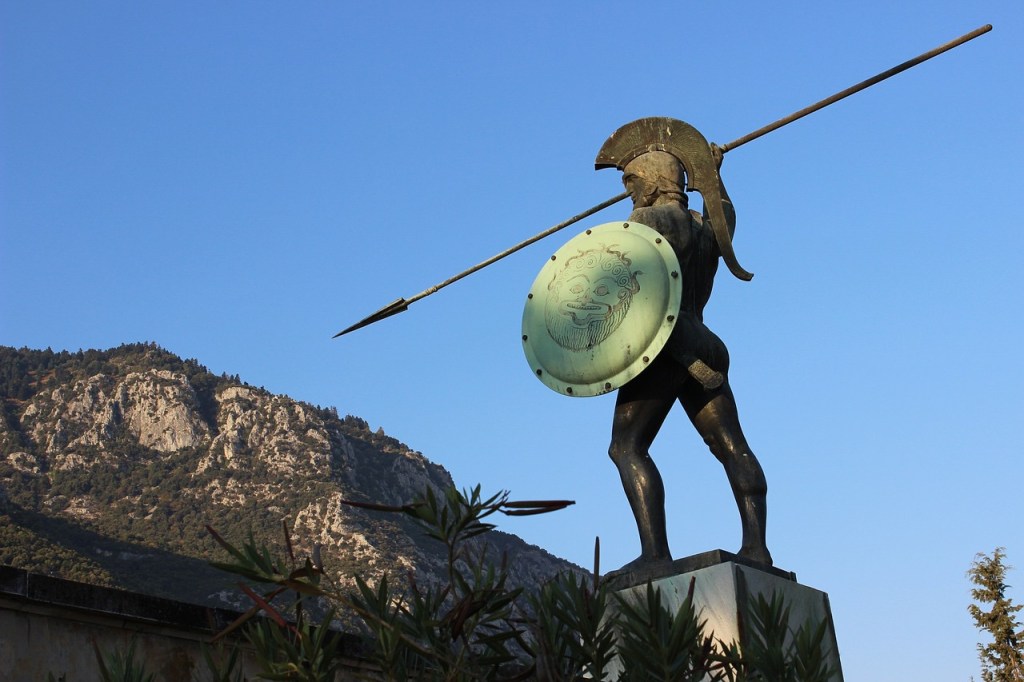
However ‘toxic masculinity’ has now become synonymous with masculinity itself, and the bannermen (think Andrew Tate, Jordan Peterson) rallying young men to embrace and defend traditional masculine values are polarising figures. This camp has, incredibly, managed to politicise masculinity itself towards the right (see t-shirt, or the infatuation with ancient Sparta) which simply leaves the crisis of masculinity only more acute and muddied.
One response to the loss of opportunity to exhibit masculine values has been finding outlets of modern life – in which men are no longer required, or even wanted, to be masculine – where that evolutionary itch can be scratched.
I locate one such area as the gym. Further, I’m identifying this growing obsession with physical fitness and heaving metal among young men as an epoch-defining trend for the demographic: the 21st century Iron Age. (Of course, the gym isn’t solely a male institution but for the sake of examining the 21st century Iron Age we will focus here on male usage.)
First, a historical overview of how masculinity entered a state of crisis (and the cultural conditions that precipitated it) is useful to understand the modern effort to pedestal the men of the past and embody their (supposed) manliness.
History is Written by the Lifters: Tracing Masculinity
First and foremost, masculinity is a concept. It is a word that encapsulates thousands of years of biological and societal ingredients, as well as behavioural expectations. It might seem obvious, but we are talking about something that can be moulded, something subjective. It’s why the ‘traditional’ view of manhood can become distinct from the more modern interpretation(s).
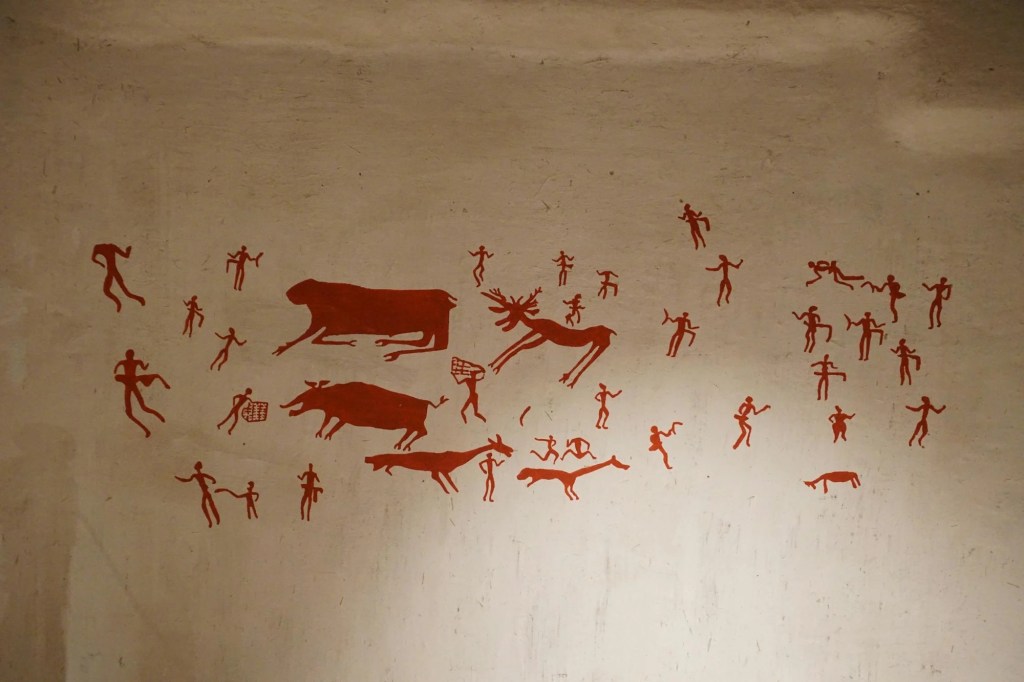
From very early on in human history, traditional ideas of manliness crystalised. This, however, was possibly not as early as you might imagine: evidence suggests that hunter-gatherer societies couldn’t be simply equated to representing the roles of male and females respectively.
Archeological analysis of prehistoric skeletal remains shows similar levels of injury from animals among male and female skeletons, as well as female remains found in proximity to weaponry – suggesting use and, one might think, proficiency. Other biological factors, such as a propensity for endurance allowing for effective persistence hunting, suggest the hunting spear was grasped by the hands of both sexes.
Despite the evidence above, all it takes is a pragmatic look at prehistoric society to understand why masculinity and femininity were yet to form as we understand them today. In a hunter-gatherer setup, with survival depending on fitness and availability of meat, it simply makes no sense to resign 50% of the community to idle at the campfire when they could be out buttressing the group’s caloric intake.
The wandering nature of the community also necessitates every able individual to possess the fitness and skills needed to perform shared tasks key to survival, so it is difficult to see why this was not utilised.
It may not be until these societies slowly transitioned into more stationary, larger groups that gender roles materialised. This created the stability and the population to allow for defined, organised, roles within the permanent community and so we can perhaps locate an emerging notion of masculinity and femininity here. (As women have reclaimed work and labour, this has been difficult for some men historically to accept due to undermining their traditional winning of the bread; this shift is only however a return to normality and so can be interpreted as breaking down the constructed barriers in place since early agricultural societies.)
As masculinity became more embedded in the way of life, and the increasing complexity and size of human societies allowed for greater power structures, hierarchy, and governance, men were therefore best poised to take on these new and important roles. Fast forward to the Greco-Roman period (332 BC -395 AD) and a deep-rooted urge to prove one’s manliness and the cementation of masculinity as the controlling societal force were both apparent.
Men in this period were greatly concerned with their manhood and developing their masculinity. As masculinity became entwined with power (physical, political, social, sexual for example), possessing it became a key currency in achieving status.
A significant amount of contemporary philosophy focused on how to nurture and grow one’s masculinity, preventing others from accusing men of softening and failing to care for their manhood. It is this fear of being labelled a ‘soft’ man or, worse, feminine that may partly drive and be reflected in the 21st Century Iron Age.
Further, the focus of much Greco-Roman philosophy on constant self-improvement is mirrored today in the subculture of seemingly obsessive young men who adopt a ‘grind’ approach to life, in which hitting the gym is a key part of chasing ‘alpha’ status, as touted by figures such as Andrew Tate.
It is no coincidence that Ares’ (Mars to the Romans) godly responsibility fell over both war and masculinity. In fact, exertion of power (often through war) as a man’s game is apparent all over the timeline: in Imperial China, where military strength was of key importance for men; in Victorian Britain, where masculine ideals were pushed on boys and men to feed the imperialistic machine; in the 20th Century, wherein millions of men entered service for their country – asked to embody masculinity or perish.
In a world where war and violence is thankfully – and relatively speaking – a smaller part of citizens’ lives (also one wherein women are occupying greater numbers in global militaries, another traditional role of men) men need a new purpose to grow and nourish their masculinity, an opportunity to prove their power and strength and better themselves and their bodies.
In the 21st Century Iron Age, a new generation is unearthing and discovering their strength, in retaliation to the deconstruction of value placed on masculinity in day-to-day 21st century life.
Therefore, the 21st Century Iron age is a symptom of the traditional roles of men being marginalised in modern society; it is a way of controlling the maligned status of manliness and pushing back, achieved through harking back to the historic view and role of manhood.
However, it isn’t having the wholesale positive effect on men’s health you might imagine. Indeed, embracement of traditional masculinity can hinder health and fitness in dark and increasingly alarming ways.
Health – the Real Crisis of Masculinity
Independence, self-determination, physical prowess, fortitude, vigour, and stoicism. All traditional masculine traits. To not embody these (supposed) virtues is to be reliant, fallible, delicate, vulnerable, fearful – to be human.
Strict adherence to the former list, when applied to a medical context, has been called ‘the superhero syndrome’: a belief that oneself is invulnerable and forever healthy. A trip to the doctor breaks the illusion. This is but one of the explanations offered as to why so many men refuse to see their doctor, refuse to follow the thread of ailments and possible symptoms of (often serious) illness.
Governments and campaigns, employed by dedicated organisations, are determined to get men to monitor their health, seeking help where needed. It is no surprise given, in the UK, 20% of men aren’t seeing the age of 65, with 33 and 88 men dying everyday from prostate cancer and heart disease respectively. One of the drivers of this insidious growth of deaths may be attributed to the supposed vulnerability involved with examinations.
Opening oneself up for a possibly life-changing diagnosis signifies vulnerability, eliciting fear and a lack of control. In many cases, it can be seen men will diminish their symptoms as to not warrant a trip to the doctor – shielding medical ailments from their male friends especially (while female partners are the most likely to learn of issues in roundabout and constricted ways). This lack of sharing issues extends beyond the physical and into the mental realm.
The pattern that 75% of UK suicides are male is now solidied over multiple years. Countless attempts exist to get men and boys talking, and the driving force behind the 21st century iron age is possibly hindering efforts here.
The gym is a brilliant tool for holistic wellbeing, but does not solve everything. It can be isolating in nature and the ‘it’s all you need’ rhetoric can sharpen superhero syndrome as well as reduce the perceived value of mental and physical assistance.
In this way, it is not just dedication to the gym that translates to fortitude, health and overall fitness. Accepting medical attention and opening up to those around us are more potent and relavent ways to halt the crisis of masculinity than treating life as a ‘grind’. This is doing harm as we speak to a generation of boys, the damage of which may not be understood until this generation reaches manhood.
Those in the 21st Century Iron age pour all their eggs into one basket, focusing on the gym and ignoring the benefits of straying beyond traditional masculine values. While I’m in no way looking to drag men out of the gym and into a therapist’s chair it is important, as with anything, to exhibit moderation and a well-rounded approach to personal development and wellbeing.
Of vital importance in achieving this is the realisation that the gym, ironically, can’t do all the heavy lifting.
Selfish History’s Book Recommendation:
How Not To Be a Boy by Robert Webb
Comedian Robert Webb opts to shun the ghostwritten biography destined for bargain bins, and instead morphs his memoir into a dissection of modern masculinity and manhood.
Extracting from his personal experiences, Robert questions the value of traditional masculine values in the upbringing of boys and young men, identifying where these are an active hindrance.
The underlying narrative is Robert highlighting where he has failed to live up to every traditional masculine ideal throughout his life (hence the title), and eventual acceptance that contorting to fit these ideas is damaging for all involved.


 Selfish History
Leave a comment