
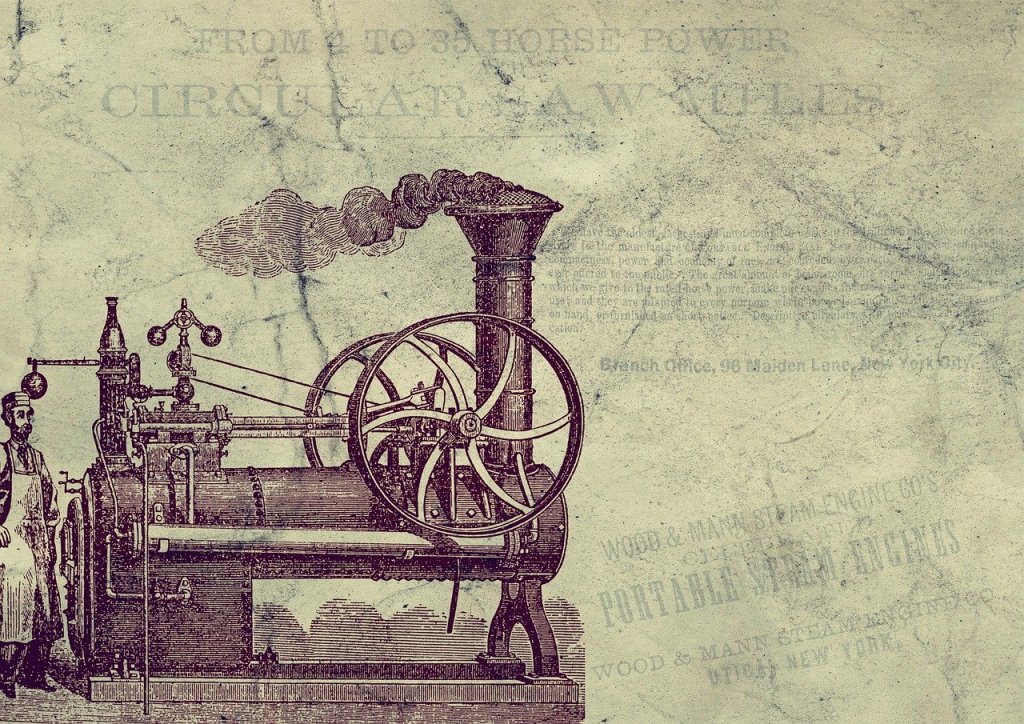
Introduction – Setting The Steam
It is safe to say that the calorie is a defining metric in today’s understanding of food. For many of us, the base caloric content of a meal is the leading determinant of its perceived health value and overall worth. This pack-printed number, for better and – often – for worse, writes our shopping lists, tells us when to feel guilty, and when to celebrate a diet-positive day.
Our initial approach to this piece, then, is that the calorie is the monarch of nutritional content values, the bedrock of our nutritional pyramid and the bread and butter of, well, our bread and butter. So, why is it that understanding of this seemingly fundamental unit of energy remains far from widespread; for the protagonist in our food story, why is its character vague and aloof?
Perhaps a trip through the history of what we define as a ‘calorie’ is a useful starting point to addressing the problem in that question, in the aim of tackling our own diets when armed with the necessary background knowledge. But first, let’s go all conceptual, and remember the calorie is essentially an invention – one that has not existed for the vast majority of human history.
It is simple yet profound to remember that we have done without calories, as we understand them, up to the 1800s. Indeed it is an odd thought to picture Mehmed the Conqueror imposing the nutritional traffic light system within Istanbul’s Grand Bazaar, or the Library of Alexandria’s shelves being home to academics keeping food diaries. Even following its invention, the defined calorie did not begin life in the orbit of food. This 19th century human creation, rather, got its start in a lab..as a method to study steam engines.
And so it is that nascent steam power is the unlikely starting point for this contextualised history of the calorie. And for that, we will ask a famous patron of the Library of Alexandria to close MyFitnessPal and tell us about his auspicious – world’s first- steam device: the aeolipile.
Hero’s Aeolipile: A Mist Opportunity
Hero of Alexandria (or Heron, but let’s proceed in avoidance of picturing a bearded coastal bird pioneeringly calculating the area of a triangle) is confidently known to history as a great mind. The Alexandria in which he operated, and in many ways came to embody, was an early metropolis pregnant with opportunity, knowledge, and human development.
Hero’s legendary tinkering and studying helped foster the growing esteem of the city, contributing to the percolation of its intellectual exports eastward into the Silk Road and, across the Mediterranean Sea, northward into Europe. The body of Hero’s work includes a number of notable achievements, but perhaps the most famous device associated with him has received its plaudits only in retrospect.
See, sitting somewhere in the Mouseion (Alexandria’s intellectual campus, most likely including the Library) during the first century AD was steam power’s proof of concept. The auspicious aeolipile which Hero so mused upon is a simple contraption really, consisting of a bowl-like boiler placed below a spherical body which is fitted with antipodal spouts.
The magic starts once the water in the boiler is heated, whereupon the resulting steam is directed out of those opposing nozzles, causing the sphere above to spin. Essentially, this ‘toy’ (parental supervision required) serves to convert steam pressure into rotational motion, in a turbine-esque manner. In other words, it innovatively converted steam (heat) into work (rotation), exhibiting the same fundamental concept of today’s mechanical behemoths.
So what happened next? Well, steam power lay largely dormant until the 16th century. And it is this developmental deadzone that makes it largely sensationalist, but too tempting a headline to omit, to say that Hero could have ushered in a major industrial revolution centuries before the gentleman inventors of the 18th and 19th centuries lent their surnames to today’s creations.
Still, the aeolipile’s underlying proof of concept hinted at, and distantly allowed for, steam power’s true coming of age during the First Industrial Revolution, where the burning of fuel to create work came to define human progression. Once steam power re-enters the history books, it did not linger for long in its previous role as a toy-like force for novelty. Certainly not when profit was at play.
In (largely western-based) industrialising societies, the progress and investment that billowed from steam power’s renaissance was backed by a healthy need for scientific input to perpetuate them. It soon became apparent that it would be useful to measure the output and efficiency of steam devices, something which Hero never thought to try with the spherical trinket he described. It is here that we arrive at the necessity for the calorie’s invention.
And so we will leave Hero’s chamber in Alexandria to pick the story up in 19th century Paris, home to the lecture room of one Nicolas Clément. (A whole 1,800 years between instalments..legacy sequels are really getting out of hand.)
Clément’s Chemical Conundrum: Conceiving ‘Confusing’ Calories
Nicolas Clément was an industrial chemist. This is to say that his renowned work at the Conservatoire des Arts et Métiers (‘Conservatory of Arts and Crafts’ to those versed in the less romantic tongue) aimed to study, optimise, and advance industrial processes with the application of chemistry.
Around the early 1820s Nicolas’ keen eye was turned to burgeoning steam power and the engines which shouldered the Industrial Revolution. His chief focus was on the heat they expelled which, in Clément’s view, acted as a form of energy like any other.
The heat energy of steam devices was therefore understood by Nicolas as ‘conserved’, meaning the mechanical work and wasted heat (outputs) of steam engines must be equal in energy to the fuel inputted. This comes under the jurisdiction of the first law of thermodynamics, which we will return to later.
Clément, operating under his conservation of energy hypothesis, noted that being able to reliably measure the outputs with a unit of energy meant that improvements to maximise the useful work of steam engines could be more definitively assessed. That unit of energy – the calorie as defined by Nicolas Clément – was published widely in French textbooks by the middle of the century.
Clément’s primary definition states that a calorie is the amount of heat energy required to bring 1 kilogram of water from 0 to 1°C. This is the precise definition that went on to bridge the gap between steam engines and the dietary calorie. So, the calorie truly did start life in a Parisian lecture room, home to an industrialist teaching and studying the output of steam engines.
We will soon cross that bridge and learn of just how Clément’s calorie came to be printed on the front of your meal deal sandwich. But we will stay a little longer in the steamy 1820s, as understanding the distinction between two definitions of the calorie is a useful window into its nutritional application – and not to mention helps us to further understand the unit of energy itself.
See, Clément’s notes contain reference to the ‘grande’ calorie, defined as above, but also a ‘petite’ calorie. This smaller unit referred to the amount of energy required to heat only 1 gram of water by 1°C – quite the difference in scale for a unit of the same name. The smaller unit entered study and scholarly discourse at the same time, and in a few decades the seemingly identical terms led to ‘calorie confusion’ among those in the field.
At one stage, it was decided that the uppercase ‘Calorie’ (1kg of water definition) would be contrasted with the lowercase ‘calorie’ (1g of water definition). Of course, this distinction is hardly impenetrable to further confusion, not least for the reason it could not be verbalised. Eventually, the term kilocalorie (kcal) came to refer to Clément’s ‘grande’ calorie, as mention of the kilogram component more effectively removed doubt. More on that later.
***
During calorie confusion’s heyday it reached Wesleyan University, Connecticut. Inside one of Wesleyan’s red brick, neoclassical buildings sat Professor Wilbur O. Atwater, preparing the experiments which would form an 1887-dated paper called ‘The Potential Energy of Food’. He was faced with a choice between adopting the gram calorie or the kilo Calorie for his work, which would go on to cement the calorie’s place as a unit of energy in nutrition and metabolics.
To Fuel The Human Engine
Once the calorie was defined in the world of steam engines, research in the field went full [redacted due to obviousness of pun] ahead. With Clément to thank for a way to quantify the mechanical output of the engines and the energy content of the fuel burned, there remained the task of obtaining a controlled environment with which to perform the calorific experiments.
That is where the bomb calorimeter comes in. The bomb calorimeter, at a slight stretch, is something of an aeolipile-esque contraption. After all, both devices involve the production of heat in a vessel and each operate on thermodynamics. Only, in the bomb calorimeter’s case, the heat energy given off by combusting a lump of fuel is measured and quantified in calories. This allowed the merits of different fuels to be measured. For example 1kg of coal, when combusted in a bomb calorimeter, reveals itself to hold about 7,000 kilocalories of energy.
Atwater, who was interested in the relationship between fuel and output in humans, thought why not, instead of coal, put a lump of beef in a bomb calorimeter? The inherent energy of different foods, theorised Atwater, could be revealed by measuring their caloric content through bomb calorimetry. So, that is what he did.
The result was, as you are about to find out, unfortunate for a number of bananas. Stripped, dried and contorted into a perfect, wired-up pellet, these yellow recruits were placed in a spherical chamber: the bomb. Next, the bomb was submerged underwater before finally our poor ‘nana is set alight through electrocution (dispensed via the wire).
As the pellet combusted, the water surrounding the bomb naturally heated up. And so, thanks to the banana’s sacrifice, the water’s temperature change can be quantified in calories (remember Nicolas’ definition). So, we are able to use this controlled figure to identify the ‘gross energy’ of bananas.
Using this gross figure, the self-named ‘Atwater system’ eliminated the calories lost in digestion and excretion; just as steam engines experience wasted outputs, as do we. So, finally, the actual useful energy to us is unveiled, which is the figure printed on your Banana Weetabix.
Of course, Atwater – the sadist – used his bomb calorimetry to measure the gross energy of all sorts of foodstuffs, including concentrated macronutrients. You may have come across these figures previously, but it is Atwater’s experiments that resulted in what is known as the ‘4/4/9’ rule, whereby 1 gram of protein and carbohydrates hold 4 calories and 1 gram of fat boasts 9. These figures remain foundational in calorimetry today.
It may seem obvious to us now, but Atwater’s experiments proved that different foods offered different levels of energy, which he cleverly expressed in calories. From his findings, Atwater produced a number of ‘food tables’ which listed the caloric content of hundreds of staple foods in the American diet – and these were Atwater’s core offerings in pushing the notion that not all food is metabolised equally.
***
But let’s reverse a little, to discuss which of Clément’s calories Atwater opted for: the ‘large’ kilocalorie. A second thought reveals the choice as proof that calorie confusion has not been quelled by the scientific community, as the vast majority of us refer to calories as just that, calories.
Based on the original definition, however, humans need 2 – 3,000,000, ‘calories’ per day.. If that number seems daunting, and promises the tedious use of an abacus to count them, then you hold the same opinion as Atwater. The smaller figures, expressed in the tens and hundreds, were much more computable, he thought. And so the kilocalorie was chosen (but that does not mean we still don’t eat over 2 million calories per day, at least according to the original definition of the word).
Luckily, in 1948, the joule became the standard unit of energy. Only the calorie by then had such a hold on established nutritional lexicon that it remains the predominant nutritional energy value in most countries today. In the UK, the kilojoule and kilocalorie values are provided together, although few in the office abstain from birthday cake citing that they are ‘watching their kilojoules’.
And here we finally arrive at the modernity of the office chocolate cake and the calorie-counters that it stares intently in the eye. From Hero’s contraption in the Library of Alexandria, to industrial chemistry during the reign of the steam engine, to a very ill-fated banana in Connecticut, the calorie’s tale is a journey through history and proof of the unexpected progress of human thought and experimentation.
In more recent times, however, our unlikely food protagonist has gained a bad rap in many circles. Talk of ‘calories don’t matter’ and the unfashionable practice of calorie counting are beginning to take over discourse about the unit of energy which serves only as a factual quantification of energy values. In that view, I’ll finish with a defence of sorts.
In Defence Of Calories And The Bananas Who Died For Our WeightWatchers Sins
One argument that detractors of the calorie use relies on their knowledge of the above. More specifically, the calorie’s beginnings as a means to study the fuel efficiency in steam engines is used to rubbish them when referring to their application to the human body. After all, we are not inanimate, mechanical machines – so is it not surely laughable to think calories should be so vaunted and treated as transferable to our flesh and blood bodies?
It is, however, not so much a ‘gotcha’ moment (to dismiss the calorie as a hangover from a bygone industrial age) as it may seem. It is important to remember that the calorie is a dispassionate, versatile unit of measurement which is applicable to multiple forms of energy – chemical, mechanical, or otherwise.
While it began life in service of their study, the calorie is not merely a steam engine term: it’s a unit of energy which has been used in studies pertaining to both the steam engine and the human engine. But how can one unit of energy unify two seemingly disparate systems?
The reason that calories can be used to measure the energy efficiency of fuel for humans and steam engines is a mutual reliance on the First Law of Thermodynamics. This means that energy is conserved in that it cannot be created or destroyed, only transferred. We mentioned this earlier in relation to the way in which steam engines take in a defined amount of fuel, and use it to produce work and waste which are equal to the original fuel input.
We humans also produce work from our inputs. Chemical energy extracted from our food is utilised to fuel our metabolism, as well as stored within the system as fat. We also waste heat energy, generated as a byproduct of our internal processes.
Both the steam and human engines can, with a full accounting of their energy inputs and outputs, therefore have their fuel efficiency measured by a common unit of energy, that being calories. Atwater’s experiments on the metabolic effect of different foods is therefore proof of the transferability of scientific study and are a continuation of Clément’s energy studies of inanimate objects.
And to those who argue that bomb calorimetry is performed in too much of a closed system, and does not represent the complex, multifaceted nature of human energy use, we refer to the Atwater system (as mentioned earlier). The gross energy value of the sample is here distilled down, through making adjustments for those very factors, into the useful, available energy. In essence, the uncontrolled system to which we swallow our fuel is controlled for.
***
Next up in our defence of the calorie is the ‘not all calories are created equal’ crowd. This argument often presents itself in the form of a simple comparison such as: ‘1,000 calories of broccoli and 1,000 calories of chocolate have vastly different effects on our health, so calories are irrelevant’. Let’s go ahead and uncover how that statement shows flawed logic concerning calories, and actually why it directly supports their existence!
Firstly, and perhaps most fundamentally, the invention of the calorie, and Atwater’s application of it, is precisely why we can make that statement in the first place. After all, without a standardised unit of energy with which to measure and compare broccoli and chocolate, how could we accurately identify the quantities of each equal in raw energy potential?
Therefore, in attempting to outline why calories don’t matter, the statement actually highlights the necessity of calories in being able to objectively obtain the quantity of foods needed for a like-for-like comparison of their useful potential energy.
The statement also omits that Atwater’s experiments are heavily based on the nutritional content of food, and indeed serves to facilitate the answer as to why 1,000 calories of broccoli and 1,000 calories of chocolate result in different health effects.
Atwater’s 4/4/9 rule of protein, carbohydrates, and fat is the window through which we can grasp food’s nutritional composition, which totals its overall caloric value. From here, the system allows us to study the different health effects of broccoli and chocolate (satiety, temperature change, blood composition, ect), but a controlled experiment relies on the initial caloric value of the samples being equal.
Another point of disagreement is that the statement does not magically untether the human body from its adherence to the First Law of Thermodynamics. This reveals how calories can be viewed as equal, regardless of their source.
The simple basis of this rebuttal is that intaking too many calories leads to an increase in those stored for energy (ie: weight gain) and the opposite leads to those stores being raided to continue producing work (ie: weight loss). This is referred to as the energy balance, and playing around with it can be a useful rough guide in maintaining, losing, and gaining weight.
In this way, 1,000 calories is indeed 1,000 calories. Nutritional effects aside, broccoli and chocolate are both capable of introducing too little or too great amounts of energy to our system and, as energy can only be conserved, too much of either will lead to some unwanted conservation in the waistline region.
To finish up, statements such as the above aim the crosshairs at the wrong target. Those who use it as a means to dismiss calories actually have a bone to pick with the source of the calories, not the metric which is used to make an informed comparison between different fuels.
And lastly, understanding the human body’s energy balance relies on calories as a quantitative metric of our energy needs. To fulfil the balance in the ‘right’ way is a question of nutrition, but calories allow us to explore those pastures from a like-for-like starting point.
Selfish History’s Book Recommendations
A Calorie is a Calorie: The Inescapable Science that Controls Our Body Weight by Kieth Frayn – for those looking further into the calorie’s role in the energy balance and the ‘calories in calories out’ method of weight control.
The Unbound Prometheus: Technological Change and Industrial Development in Western Europe from 1750 to the Present – for a comprehensive overview of the changing western world in which the calorie was invented, and to which it was employed in service of the unprecedented period of transformation.



 Selfish History
Leave a comment