
The value of a definition
Value has been bestowed on a great many things in history. In fact, in the broadest definition, everything has an inherent value. This fickle and turbulent designated merit is subject to the ever-shifting prevailing winds of situational, developmental, cultural, geographical and political systems.
Value isn’t just for the tangible either. It can be a principle, as well as deeply situational. For example, the value of comradery spikes when sailors find themselves marooned, the value of fitness is waning in an automated society, the value placed on religion and spirituality often increases when one nears the end, and my value of willpower plummets when I receive an Uber Eats notification on a Sunday.
However, financially speaking, and in the vein of this series, value is synonymous with currency. Valuation and currency as being humanly constructed is well understood, however this has come in many different forms and has evolved through history, much like a stock, with setbacks, splits, and styles.
That’ll cost you a pretty shell: Commodity Money
Early human development was sinewed by the exchange of earthly commodities – such as animal materials, tools, skills or (latching to magpie-like desires) pretty shells – which required a shared understanding of the intrinsic value of the concerned commodity.
Proliferation of trade was therefore a driving force for the formation of placing value upon anything one could grasp, own, dispense, or otherwise claim. Naturally, nobody seeks out a poor trade (unless you require equine assistance on the level of Shakespeare’s King Richard III) and so intrinsic value underlined bartering: everything from grain to textiles became media for exchange as interconnectivity emerged.
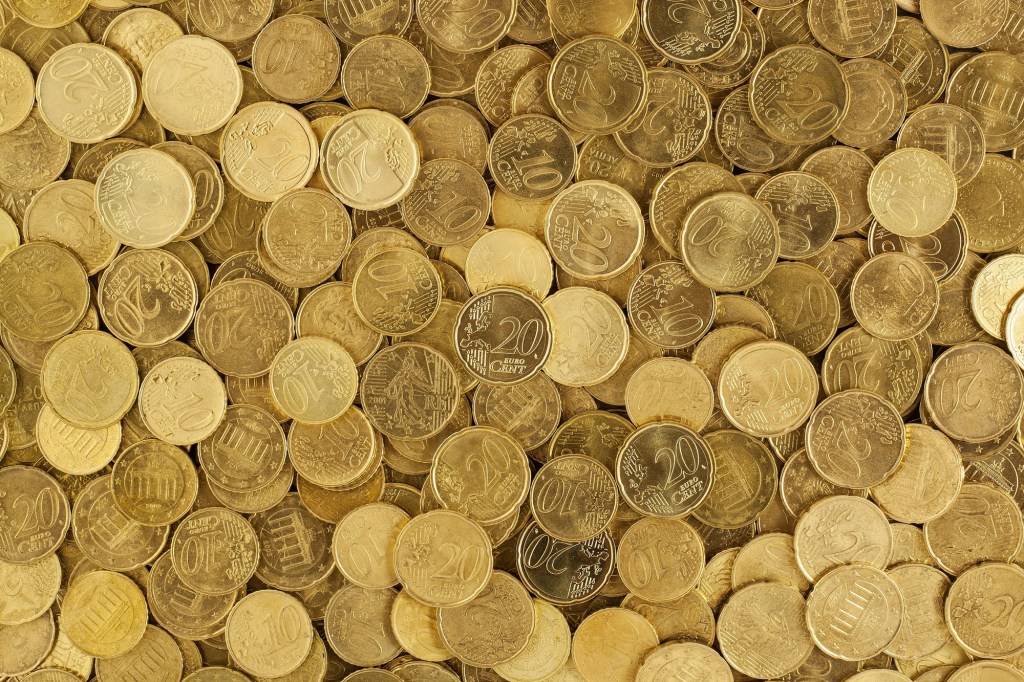
The umbrella covering commodity monies such as these extend into what we might consider a slightly more modern currency, one which is the subject of many a tale throughout history: precious metal coins.
These coins hold their intrinsic value as they are, generally, worth the quantity of metal that comprises them; when reduced to its raw material (through melting) a gold coin retains its intrinsic value, unlike paper or much of today’s coinage.
Metal coins – the earliest example of which dates to 600 BC Lydia (now Turkey) under the reign of one King Alyattes – don’t just provide evidence of conventional use of coinage, they betray tantalising details of the society they once circulated. Coins offer a small, round(ish) temporal gateway into their world, allowing for political, economic, artistic, and archaeological insights. This study has its own name: numismatics.
Crucially these coins were stamped by the issuer (often the state, government or otherwise leading figure) which, as well as allowing us to form a rogue’s gallery of historical figures, indicates a level of formal guarantee of their value and acceptance. It bridges us from weighing currency towards counting it instead.
Origin of Fiat Money – It is Worth the Paper it’s Written on.
Reliance on intrinsic value is of course rather distinct from our predominant form of currency today – known as fiat money – which, being paper or digital, lacks inherent worth. Here a small parcel of paper is worth its designation despite holding the same, fractional, commodity value as various other denominations. Instead of the underlying intrinsic value of metal, the value of the note is backed by the issuer of this legal tender: the government or central bank.
Bonafide paper money is first evidenced in China, beginning with the Song Dynasty around 1000 AD. Known as jiaozi, these representative, or promissory, notes were, at least in theory, still backed by an underlying exchange value relating to metal commodities.
The initial scope of usage for these notes was a narrow one. Restricted geographically and temporally – the notes were supposed to be retired after three years of circulation – jiaozi was to be found predominantly in the hands of private merchants.
However, the benefits of this system soon became clear and so control and production was grasped by the central government. State-fed factories soon churned out chunky wads of jiaozi, pointing to a wider embracement but also precipitating a persistent problem all economists must be wary of: inflation.
Jiaozi flooded the market, a torrent that can be traced to overproduction and lack of adherence to the three-year circulation rule. The notes therefore greatly outnumbered metal coins, thus losing their backed-up value.
Efforts to reduce abundance and create greater demand, through taxation and introducing replacement notes, proved unfruitful. However, the promising seed of fiat money was planted, and it germinated into much wider usage under a paper money system that once again became firmly under government (or here dynastic) control.
The subsequent Yuan Dynasty, of Mongol origin, following their dispatching of the Song and Jin Dynasties, embraced state-controlled and taxed paper currency. Jiaochao, issued at first under Kublai Khan, became the first paper money to become the leading medium of exchange in Chinese (possibly world) history.
Being somewhat of a trendsetter in this department, this system of treating illustrated paper with all the reverence, desire, and seriousness as when doing business with precious commodities was something of a novel performance to outsiders.
One such onlooker was Marco Polo. His work on those famous travels being an important insight into the details of these paper notes, from physical dimensions to outlining the various denominations. Of the Yuan Dynasty’s fiat money, he marvelled at the treatment of these sheets being ‘just as well as if they were coins of pure gold’
Investing our Trust in Central Banks
Marco Polo’s words highlight a key part of Fiat money in that it relies on a healthy dose of trust. For example, I trust that at my destination my taxi driver will accept a crumpled piece of plastic from my wallet (or me paying with digital fiat money) in return for their service.
In turn, the driver relies on mutual trust in fiat money among mechanics for servicing his car, oil companies for fuelling it, and insurance firms for protecting it. My taxi driver also pays tax on his income to the government – the guardian of fiat currency.
Unlike commodity money, fiat money is subject to considerable control and regulation, of which taxation is a key process. Understanding its lack of intrinsic value is key to understanding how and why much financial regulation occurs in our modern societies.
So, this controlled nature of fiat money means it can be taxed which, under a macroeconomic theory called chartalism, means the value is derived by law. In other words, fiat money holds value as a medium because its influence is gifted in law by the sovereign. Overall, the fact that fiat money is taxed by the issuer validates its continued use.
The Unenviable Task of Keeping Fiat Money Healthy
But what happens when this trust is lost and fiat money is subject to poor regulation and management? A common answer, evidenced in history, is economic collapse and a return to barter, with commodities reinstated as chief media of exchange.
We have also already seen how hyperinflation stemming from those churning factories irrevocably damaged the first iteration(s) of fiat money in Dynastic China. (As it happens, the first case study of fiat money answers that oft-asked question of ‘why we don’t just print more money’.)
As we know, the separation from finite commodities by modern fiat currencies allows for greater regulation. Economies are therefore ruddered by the implementation of fiat money, allowing for a degree of navigation away from the rocky zones of inflation and recession, towards the calm waters of a stable economy.
This regulation also affords control over interest rates, liquidity, and credit supply – all factors vulnerable to flare-ups under fiat money mismanagement. Central banks therefore exist to regulate fiat money: their announcements, processes, successes, and failures are all a result of their status as guardians of our medium of exchange.
***
In the worst cases, trust is lost from both sides. Should the issuer declare they no longer back the value of their own tender, a collapse in value ensues.
It is then not a guarantee that fiat money is the obvious choice for a stable economy. And, yes, we probably can’t go back to purchasing our morning coffee with a handful of beads either.
There is however a case to be made for commodity investments, which we could consider for our own personal finances as a result of understanding the nature of our currency.
A Return to Gold?
Gold retains its value in a way fiat currencies do not. It is finite, vaunted, precious. Anchoring your currency on the price of gold is in some circles believed to offer greater stability due to this tangible bulwark.
Indeed, the US dollar’s value was defined and backed by gold. A citizen was able to convert their dollars into gold until 1971 when this relationship was severed, making the dollar a true fiat currency. (This system is the true meaning of the phrase ‘gold standard’.)
It is this severance of gold from world currencies that makes it an attractive, defensive investment presently. The intrinsic value of gold, in place now for thousands of years, coupled with its finite supply means that it is viewed as the perfectly poised hedge to inflation.
In this way, those that own gold (through physical assets or as part of an exchange traded fund) will tell you they are best protected against a collapse in fiat currency, of which it is no longer tied to.
It might therefore be prudent to consider an investment in gold (or other commodity assets). This is especially of note if you identify ominous portents surrounding the economic future of your country, or begin to lack trust in the regulation of your fiat currency.
Selfish History’s Book Recommendation:
Material World: A Substantial Story of Our Past and Future by Ed Conway
We ended this post with a recommendation not to resign gold ownership as an antiquated practice, highlighting the continued importance and potential for this precious material even if it no longer backs the majority of modern currency.
In this book, Ed Conway takes six more commodities and outlines how they are the page turners of the human story in past, present, and future. Each chapter outlines how seemingly simple materials, such as sand, are in fact implemented in unexpected and far-reaching ways in our lives.
In a world that feels increasingly digitised, illusory and artificial, Material World reminds us of the enormous debt we owe to physical commodities and how this sum is only compounding as we look to our future.




 Selfish History
Leave a reply to susieberesfordwylie Cancel reply